The post 8 Things You Should Do Before Studying in Canada in 2027 first appeared on canadaimmhub.ca.
The post 8 Things You Should Do Before Studying in Canada in 2027 appeared first on canadaimmhub.ca.
]]>Choosing a school, getting admission and applying for a study permit all require planning, and Canada’s international student rules can change. So rather than relying on information from old applications, WhatsApp groups or social media, start building your plan around your own academic goals, finances and the current official requirements.
Here are eight things Nigerian students should do before applying.
1. Decide What You Want to Study
Start with the programme, not the country. Think about what you want to study, how it connects with your previous education and what you hope to do with the qualification afterwards.
Then look at the actual curriculum, duration, tuition and admission requirements before applying to study in Canada in 2027.
Don’t choose a programme simply because someone says it is a “good course to study in Canada.” What works for another student may not make sense for your academic background or career plans.
2. Research Your Schools Properly
Once you know what you want to study, compare your options. Look at the programme, tuition fees, location, start dates, accommodation, student support and admission requirements. This is one of the things to do before studying in Canada in 2027.
You should also confirm that the institution is a Designated Learning Institution (DLI) if you need a study permit.
Most importantly, don’t choose a school based solely on its popularity online. Two Canadian institutions offering similar programmes can have very different costs, locations and student experiences.
3. Check the Admission Requirements Early
Find out what your chosen programme requires before you start spending money on an application. Depending on the institution and programme, you may need academic certificates and transcripts, proof of language proficiency, references, a personal statement or other supporting documents.
Every school has its own admission process, so check directly with the institution before applying to study in Canada in 2027
Starting early also gives you time to fix problems if a document is missing or you don’t meet a particular requirement.
4. Work Out the Real Cost
Tuition is only part of the cost of studying in Canada. Your budget may also need to cover accommodation, transportation, food, flights and other expenses associated with settling into Canada. Tuition research is one of the important things to do before studying in Canada in 2027.
IRCC currently requires study permit applicants to demonstrate funds for tuition, living expenses and transportation, without relying on work in Canada to demonstrate that financial capacity. The living-expense amount is updated annually. For applications starting September 1, 2026, one applicant from outside Quebec must demonstrate CAD $23,448 in annual living expenses, excluding tuition and transportation.
That figure is not a 2027 guarantee. If you’re applying in 2027, check the updated amount when you apply. The bigger point is to calculate your entire study plan rather than asking only, “How much is the visa?”
5. Understand the Study Permit Process
Admission and a study permit are two different things. IRCC currently requires study permit applicants to provide documents including a valid letter of acceptance from their DLI and proof of financial support. A PAL or TAL is also required in many cases, although there are exemptions. Read more.
There are also other eligibility requirements that may apply to you depending on your circumstances.
Because these rules can change, make checking the current IRCC requirements part of your application process.
6. Prepare Your Documents Early
Don’t wait until you receive admission before thinking about your paperwork. Start organising your academic records, passport and financial documents, and identify anything else your school or study permit application may require.
IRCC currently recommends submitting as many of the required documents as possible with the initial application because incomplete applications can cause delays.
Having your documents ready early also makes it easier to spot gaps before they become a problem.
7. Think About What Happens After Graduation
Don’t choose a Canadian programme without understanding what comes after it. If working in Canada after graduation is part of your plan, check whether your intended programme and institution meet the current requirements for a Post-Graduation Work Permit (PGWP).
The rules are not the same for every programme. Current PGWP eligibility includes requirements around the type and length of programme, language ability and, for some programmes, eligible fields of study.
And don’t let anyone promise you permanent residence simply because you study a particular course. Immigration pathways can change, and eligibility depends on your circumstances.
8. Talk to Universities Before You Apply
You can spend hours researching Canadian universities online, but sometimes the fastest way to get clarity is to speak to the institution directly.
Ask questions about your programme, admission requirements, tuition, scholarships, application deadlines and international student support. This is where education fairs can be particularly useful.
Meet Canadian University Representatives in Lagos
The Japa Partners Study Expo gives prospective students an opportunity to meet representatives from universities across Canada, the UK, USA, Europe and other destinations.
Canadian institutions participating include Sheridan, Yorkville University, Algoma University, St. Lawrence College and Laurentian University, among others.
The Expo takes place on 3 October 2026 at The Zone, Gbagada, Lagos.
If you’re planning to study in Canada in 2027, you can use the opportunity to ask questions directly and start understanding your options before you apply.
Learn more about the Japa Partners Study Expo here
The post 8 Things You Should Do Before Studying in Canada in 2027 first appeared on canadaimmhub.ca.
The post 8 Things You Should Do Before Studying in Canada in 2027 appeared first on canadaimmhub.ca.
]]>The post How Much is Cost of Studying in Canada in 2026? first appeared on canadaimmhub.ca.
The post How Much is Cost of Studying in Canada in 2026? appeared first on canadaimmhub.ca.
]]>You also need to account for housing, food, transportation, health insurance, books, flights and the money you need to demonstrate for your study permit. For 2026, a student applying for a study permit outside Quebec must show CAD $22,895 in living expenses for one year, separate from tuition and transportation.
So the useful question isn’t simply, “How much is tuition?” It is: “How much money will I actually need for my first year in Canada?”
This guide breaks down the cost of studying in Canada in 2026 into the expenses that matter, including tuition, living costs, proof of funds, accommodation, transportation and the costs students often forget to plan for.
Quick answer: Your first-year budget is generally the actual first-year tuition, plus CAD $22,895 in required living funds for one student outside Quebec, transportation, and other applicable costs. The CAD $22,895 figure is the federal living-expense requirement; it
is not your total study budget.
What makes up the cost of studying in Canada in 2026?
There is no single price for studying in Canada. Your total depends on your programme, school, province, city and personal circumstances. Think about your budget in these categories:
- Tuition: what your school charges for the programme
- Living expenses: rent, food, transportation and daily life
- Study-related costs: books, supplies, technology and other
programme expenses - Travel: your flight and transportation to your accommodation
- Settlement costs: deposits, household items and other expenses
when you first arrive - Financial requirement: the amount you must demonstrate to IRCC
for your study permit application.
IRCC requires applicants to show sufficient funds, without relying on work in Canada, to cover tuition, living expenses and transportation. For programmes longer than one year, you must also explain how you plan to fund the full duration of your studies.
How much is tuition for international students in Canada?
Canadian tuition fees vary depending on your school, province, course of study, and level of study. Statistics Canada reports the following 2025/2026 national averages:
- International undergraduate tuition: CAD $41,746
- International graduate tuition: CAD $24,028
Provincial averages also vary significantly. For example, average international undergraduate tuition in 2025/2026 was CAD $18,867 in Newfoundland and Labrador, CAD $21,424 in Manitoba, CAD $34,880 in Alberta and CAD $49,802 in Ontario.
These are averages, not guaranteed prices for your programme.
For graduate students, the 2025/2026 provincial averages ranged from CAD
$6,964 in Newfoundland and Labrador to CAD $28,624 in Ontario. The best way to budget is to use the actual tuition quoted by your
institution.
What other costs should you budget for When calculating cost of studying in Canada in 2026?
The IRCC living-expense figure is a financial requirement, not necessarily your actual spending.
You should also budget for:
- Rent or student residence
- Food and groceries
- Local transportation
- Health insurance
- Books and supplies
- Phone and internet
- Clothing and winter gear
- Personal expenses
- Initial settlement costs
- Emergency savings
The Government of Canada notes that health coverage for international students
varies by province and that schools can provide insurance information.
What would a first-year cost of studying in Canada in 2026 look like?
Use your actual tuition and then add the IRCC amount.
Example: CAD $18,000 tuition
- Tuition: CAD $18,000
- Living requirement: CAD $22,895
- Transportation: additional
- Other setup costs: additional
Starting point: CAD $40,895 + transportation and other costs.
Example: CAD $25,000 tuition
- Tuition: CAD $25,000
- Living requirement: CAD $22,895
- Transportation: additional
Starting point: CAD $47,895 + transportation and other costs.
Example: CAD $40,000 tuition
- Tuition: CAD $40,000
- Living requirement: CAD $22,895
- Transportation: additional
Starting point: CAD $62,895 + transportation and other costs.
These are planning examples, not a universal bank-balance requirement.
Do you need all the money in one bank account?
No, not exactly. IRCC lists several types of financial evidence, including:
- Bank statements
- A Canadian bank account in your name
- A Guaranteed Investment Certificate (GIC)
- A student or education loan
- Scholarship documentation
- Proof of tuition or housing payments, together with evidence of
sufficient remaining funds - A letter from the person or institution providing financial support,
supported by proof of funds
IRCC also lists bank statements covering the past six months as one
possible form of evidence.
Can your parents sponsor your studies?
Yes. A parent can be part of your financial support plan. The important part is making the financial story clear:
- Who is paying?
- Where did the money come from?
- How much are they contributing?
- What costs will it cover?
- How will the remaining costs be funded?
A large unexplained deposit is not a substitute for a credible financial history.
Can a scholarship reduce the amount you need?
Yes. IRCC accepts scholarship and other financial support documentation as evidence. If the scholarship covers only tuition, you still need to demonstrate how you will cover living expenses and transportation.
Can you work in Canada to pay for school?
Eligible international students can work, subject to their study permit conditions and Canada’s current rules. However, your initial financial plan should not depend on future employment. IRCC requires applicants to demonstrate enough funds without relying on work in Canada.
Does the amount change if your family comes with you?
Yes. The living-expense requirement increases with the number of family
members accompanying you. For example, outside Quebec:
- 1 person: CAD $22,895
- 2 people: CAD $28,502
- 3 people: CAD $35,040
- 4 people: CAD $42,543
You also need to consider the family’s transportation, accommodation, food, insurance and other costs.
How can Nigerian students reduce the cost of studying in Canada in 2026?
If your budget is limited:
Compare provinces: Average tuition and housing costs differ across Canada.
Compare programmes: Two programmes at the same level can have very different tuition fees.
Also compare cities: A lower tuition fee does not necessarily mean a lower overall cost if housing is much more expensive.
Consider shared accommodation: Sharing housing can reduce your monthly expenses.
Look for scholarships: Check your institution and relevant scholarship sources.
Budget for the whole first year: Do not budget only for tuition and the visa. Include housing, food, transport, insurance, books, flights and settlement costs.
How much money should you have before applying?
There is no universal bank-balance number. Use this formula:
First-year tuition + applicable living-expense requirement + transportation + realistic additional costs.
Then prepare evidence showing where the money comes from and how you will fund the remainder of the programme.
What is the cheapest province to study in Canada?
There is no single answer for every programme. For 2025/2026, Newfoundland and Labrador had the lowest average international undergraduate tuition among the provinces listed by Statistics Canada at CAD $18,867. New Brunswick and Manitoba were also below the national average.
But tuition is only one part of the equation. Compare tuition, housing, transportation, and programme fit.
Frequently asked questions
How much money do I need to study in Canada in 2026? For one student outside Quebec, IRCC currently requires proof of CAD $22,895 in living expenses for one year, excluding tuition and transportation. You must also demonstrate that you can pay tuition and transportation.
Is CAD $22,895 enough to study in Canada? No. It is the current one-person living-expense requirement outside Quebec. It does not include tuition or transportation.
How much does university cost in Canada for international students? For 2025/2026, Statistics Canada reports average international tuition of CAD $41,746 for undergraduate students and CAD $24,028 for graduate students. Actual fees vary.
Can I use my parents’ bank account as proof of funds? Financial support from another person can be used, but you need documentation showing the relationship, the source, and the availability of the funds. Follow the current IRCC and country-specific instructions.
Can I use a scholarship as proof of funds? Yes. Scholarship and other financial-support documentation can be used as evidence.
Can I work in Canada to fund my studies? Eligible students can work subject to Canadian rules, but you must demonstrate sufficient funds without relying on work in Canada for the initial requirement.
Final thoughts on cost of studying in Canada in 2026?
There is no magic bank-balance number for studying in Canada. Start with your actual tuition. Add the current IRCC living-expense requirement. Add transportation and the costs your specific city and programme will create.
Then ask the bigger question: How will I fund the rest of my programme?
That is a much stronger way to plan your study-abroad journey than by looking up a single number online.
Not sure if your finances meet IRCC’s current requirements? Book a free consultation with us here, and we’ll review your tuition, proof of funds, and documentation before you submit, so you’re not guessing about a $22,895+ decision.
The post How Much is Cost of Studying in Canada in 2026? first appeared on canadaimmhub.ca.
The post How Much is Cost of Studying in Canada in 2026? appeared first on canadaimmhub.ca.
]]>The post Canada Study Permit Requirements for Nigerians: 2026 Complete Guide first appeared on canadaimmhub.ca.
The post Canada Study Permit Requirements for Nigerians: 2026 Complete Guide appeared first on canadaimmhub.ca.
]]>This means you can afford your education and living expenses, and have a credible reason for choosing your programme. The requirements can also vary depending on the school, programme, province, your personal history and the instructions that apply to applicants in your country.
This guide breaks down the main Canada study permit requirements for Nigerian students in 2026 and explains what you should prepare before submitting an application.
Most Nigerian students applying for a Canadian study permit need a valid Letter of Acceptance from a Designated Learning Institution (DLI), proof of identity, proof of sufficient funds, and any required Provincial Attestation Letter (PAL) or Territorial Attestation Letter (TAL). You may also need biometrics, a medical examination, police documentation and additional documents based on your circumstances. You must also satisfy the officer that you will respect the conditions of your stay and leave Canada when your study permit expires.
What are the Canada study permit requirements for Nigerian students in 2026?
The core requirements are:
- Admission to a Designated Learning Institution (DLI).
- A valid Letter of Acceptance (LOA).
- A PAL/TAL unless you qualify for an exemption.
- Proof that you have enough money for tuition, living expenses and transportation.
- A valid passport or travel document.
- Academic documents and other supporting documents relevant to your application.
- Biometrics, where required.
- A medical examination or police certificate, where required.
- A convincing explanation of your study plans and why the programme makes sense for you.
- Evidence that you will comply with your temporary resident status in Canada.
IRCC states that a study permit applicant must be enrolled at a DLI, demonstrate sufficient funds, meet admissibility requirements and satisfy an officer that they will leave Canada when their study permit expires.
For Nigerian applicants, the local visa office instructions can require additional academic and financial evidence. The 2026 Nigerian checklist, for example, refers to WAEC/SSCE/NECO results, post-secondary transcripts, certificates and diplomas, previous passports and NYSC documentation where applicable.
You need admission from a Canadian Designated Learning Institution as part of Canada study permit requirements
Before applying for your study permit, you normally need a Letter of Acceptance from the Canadian school where you intend to study.
The school must be a Designated Learning Institution (DLI).
Your LOA should contain the information IRCC needs to verify your admission. IRCC also requires post-secondary institutions to validate letters of acceptance when requested.
This means you should not simply choose a Canadian school because someone says it is “easy to get into.” You need to check whether the institution and programme are appropriate for your study permit and, if your long-term plan includes working in Canada after graduation, whether the programme meets the relevant post-graduation work permit rules.
What should Nigerian students check before accepting an offer?
Look beyond tuition fees.
Check:
- Whether the institution is a DLI
- Whether the programme fits your previous education and career direction
- The programme length
- Tuition and other mandatory fees
- Location and expected living costs
- Whether the programme is eligible for the work options you are expecting after graduation
- Whether a PAL/TAL is required
- Whether the institution has space under the applicable provincial allocation
A cheap programme that does not align with your background can create a weaker application than a programme with a clear academic and career rationale.
You may need a Provincial Attestation Letter (PAL) or Territorial Attestation Letter (TAL)
The PAL/TAL system is one of the major changes Nigerian students need to understand.
For many students, a PAL/TAL is required before submitting a study permit application. It is issued through the province or territory and provided to the student through the designated learning institution.
However, there are exemptions.
As of 2026, students entering a degree-granting master’s or doctoral programme at a public DLI are not required to have a PAL/TAL. Primary and secondary students, as well as certain other categories, are also exempt.
If you are applying for an undergraduate degree, college diploma, postgraduate certificate or another programme that falls within the PAL/TAL-required group, you should confirm the requirement before submitting your application.
Do not assume that because a friend did not need a PAL, you do not need one either.
You must prove that you can afford your studies
This is one of the most important parts of a Canadian study permit application.
IRCC requires you to demonstrate that you have enough money to cover:
- Your tuition
- Your living expenses
- Transportation to and from Canada
- The living and transportation costs of accompanying family members, if applicable
The money must be available without relying on employment in Canada to fund your initial stay.
For applications outside Quebec submitted on or after September 1, 2025, the current annual living-expense requirement for one person is CAD $22,895, excluding tuition and transportation. The amount increases with the number of accompanying family members. This figure is important, but it is not your total study budget.
For example, a student whose first-year tuition is CAD $20,000 would need to consider tuition, required living funds, transportation, and other relevant costs.
What can you use as proof of funds to meet the Canada study permit requirements
IRCC lists several examples, including:
- Bank statements
- Proof of a Canadian bank account
- A Guaranteed Investment Certificate (GIC)
- A student or education loan
- Scholarship documentation
- Proof of tuition or housing payments, accompanied by evidence of sufficient funds for the remaining costs
- A letter from the person or institution providing financial support, supported by evidence of the available funds
The Nigerian visa office’s instructions also emphasise financial history and a reliable source of funds. The 2026 instructions reference certified bank statements or financial investments with a six-month history and evidence of a reliable source of funds.
This is why simply showing a large balance shortly before applying is not a good financial strategy.
Your application should make it clear where the money came from, who is paying for your studies, and how the funding relates to the cost of your programme.
Nigerian students should prepare their academic documents carefully
Your academic history should tell a coherent story.
Depending on your level of study and circumstances, you may need documents such as:
- WAEC, SSCE or NECO results
- University or polytechnic transcripts
- Certificates and diplomas
- Previous academic records
- Current academic standing
- NYSC certificate, where applicable
- Previous passports showing travel history
These are specifically reflected in the 2026 Nigerian visa-office instructions. The important point is not simply to upload as many documents as possible. Your academic documents should support the story of why you are pursuing this particular programme in Canada.
If you studied accounting and are now applying for a completely unrelated programme, your application should explain the rationale for the career change.
Your study plan needs to make sense as part of the Canada study permit requirements
IRCC may assess whether your proposed studies are reasonable based on your circumstances.
A strong study plan should help answer questions such as:
- Why did you choose this programme?
- Why Canada?
- Why this particular institution?
- How does the programme connect to your previous education?
- How will it improve your career prospects?
- Why are you not pursuing a similar option in Nigeria?
- What are your plans after completing the programme?
A study permit is not automatically refused because someone has ambitions to build an international career. The problem is that the study plan does not convincingly explain the purpose of the education.
Your application needs to show that you understand what you are studying and why it is a logical next step.
You need a valid passport and identity documents
You will need a valid passport or travel document.
IRCC’s general study permit document requirements include a copy of the passport information page. If your application is approved and you are asked to submit your passport for visa issuance, you will follow the instructions provided by IRCC.
For Nigerian applicants, previous passports showing travel history may also be requested per the local visa office’s instructions.
If you have changed your name, held previous visas, or have other identity documents that help explain your history, make sure your application is consistent across all documents.
You may need to provide biometrics
Most applicants who need a Canadian temporary resident visa, study permit, or work permit must provide fingerprints and a photograph unless they fall under an exemption.
After submitting your application, check the biometrics instructions and book your appointment as soon as possible if you receive a biometrics instruction letter.
IRCC recommends completing biometrics promptly because delays can affect application processing.
You may need a medical examination
A medical exam is not automatically required for every applicant.
Whether you need one depends on factors such as where you have lived or travelled and what you plan to study or do in Canada.
Certain programmes, including some health-related and education-related fields, can trigger medical requirements.
If IRCC requires a medical examination, it must be completed through an approved panel physician.
You may need a police certificate
A police certificate may be required depending on your circumstances and IRCC’s instructions.
Do not assume that every Nigerian study permit applicant needs to submit one automatically. Follow the personalised document checklist generated for your application, as well as the applicable visa office instructions.
You must satisfy the officer that you will respect your study permit conditions
This part is often misunderstood.
Canada allows international students to study temporarily, and a study permit is not the same thing as permanent residence.
IRCC says applicants must satisfy an officer that they will leave Canada when their study permit expires.
That does not mean you cannot have legitimate long-term career ambitions.
It means your application needs to demonstrate that you understand the temporary nature of the study permit and that you will comply with Canadian immigration rules.
Your study history, employment history, family circumstances, financial situation, career plans and overall application should tell a consistent story.
What has changed for Canadian study permit applicants in 2026?
The Canadian international student system is more controlled than it was a few years ago. IRCC introduced a national study permit cap and provincial allocations. For 2026, IRCC expects to issue up to 408,000 study permits, including new arrivals and extensions.
The government also created PAL/TAL exemptions for eligible master’s and doctoral students at public DLIs starting in 2026. The result is that choosing a school and programme now requires more planning.
You should not think of the process as:
Get admission → apply for visa → wait.
A better approach is:
Choose the right programme → confirm DLI and PAL/TAL requirements → prepare finances → build a coherent application → submit complete documents.
How much money does a Nigerian student need for a Canada study permit?
There is no single total amount that applies to every Nigerian student because tuition varies by institution and programme.
At minimum, you need to account for:
First-year tuition + required living funds + transportation + other relevant expenses.
For one student outside Quebec, the current IRCC living-expense threshold is CAD $22,895, excluding tuition and transportation. If you are bringing a spouse or children, the financial requirement increases.
This is one reason it is better to calculate your actual first-year budget before accepting a school offer.
Can Nigerian students work while studying in Canada?
Eligible international students may be able to work on or off campus while studying, subject to the conditions of their study permit and Canadian rules.
Work should not be treated as the primary means of financing the study permit application.
IRCC specifically requires applicants to demonstrate sufficient financial resources for the initial funding requirement, without relying on work in Canada.
Can a Nigerian student apply for permanent residence after studying in Canada?
Possibly, but a study permit does not guarantee permanent residence.
Some graduates may qualify for a Post-Graduation Work Permit, depending on the institution, programme and current eligibility rules. Some graduates may later qualify for permanent residence through programmes such as Express Entry or a Provincial Nominee Program.
The correct way to think about the pathway is:
Study permit → eligible post-study work option, where applicable → qualifying work experience and immigration programme → PR eligibility
Not every programme leads to the same outcome, so you should check post-graduation work and immigration implications before choosing a course.
Canada study permit checklist for Nigerian students
Before submitting your application, review:
- Letter of Acceptance from your DLI
- PAL/TAL, if required
- Valid passport
- Academic certificates and transcripts
- WAEC/SSCE/NECO documents where applicable
- NYSC certificate where applicable
- Proof of funds
- Evidence explaining the source of funds
- Study plan or letter of explanation, where applicable
- Biometrics, if required
- Medical examination, if required
- Police certificate, if required
- Any additional documents requested by IRCC or the applicable visa office
How much proof of funds do I need to study in Canada in 2026?
For one person studying outside Quebec, IRCC’s current living-expense requirement is CAD $22,895 per year, excluding tuition and transportation. You must also demonstrate that you can cover your tuition and transportation costs.
Do Nigerian students need a PAL to study in Canada?
Many Nigerian students do, but not everyone. In 2026, eligible students entering degree-granting master’s or doctoral programmes at public DLIs are exempt from the PAL/TAL requirement, along with certain other categories.
Can I study in Canada without IELTS?
A Canadian study permit application and a school’s admission requirements are not the same thing. Some institutions may accept alternatives to the IELTS or waive the English-language test in line with their own admission policies. You should check the specific school’s requirements and any language evidence required for your application.
How long does a Canada study permit take?
Processing times vary depending on the application type and location. Check IRCC’s current processing-time tool when you are ready to apply rather than relying on an old number from a blog or social media post.
What can cause a Canada study permit refusal?
Refusals can happen for several reasons, including concerns about finances, the purpose of study, admissibility, documentation, or whether the applicant has satisfied the officer that they will comply with the conditions of their temporary stay.
For Nigerian students, the Canada study permit process in 2026 requires more planning than simply securing admission. Your school choice, programme, finances, academic history and study plan all need to make sense together.
The strongest applications are usually those where an officer does not have to guess why the student chose the programme, how the student will pay for it, or how the proposed studies fit into the student’s wider plans.
If Canada is part of your 2026 study plan, start preparing the financial and academic side of your application early. Do not wait until you have an admission letter before thinking about the rest of the file.
The post Canada Study Permit Requirements for Nigerians: 2026 Complete Guide first appeared on canadaimmhub.ca.
The post Canada Study Permit Requirements for Nigerians: 2026 Complete Guide appeared first on canadaimmhub.ca.
]]>The post SX-1 Visa Canada 2026: How to Study for 6 Months Without a Full Study Permit first appeared on canadaimmhub.ca.
The post SX-1 Visa Canada 2026: How to Study for 6 Months Without a Full Study Permit appeared first on canadaimmhub.ca.
]]>Here’s what’s changed since we last covered this, what’s stayed the same, and how to actually apply for SX-1 visa Canada 2026.
What the SX-1 Visa Really Is (And What It Isn’t)
A common misunderstanding trips people up here, so let’s clear it first: the SX-1 is not a separate visa application. There’s no “SX-1 form” on the IRCC website. What actually happens is this: you apply for a regular Visitor Visa (Temporary Resident Visa, Form IMM 5257), and if you clearly declare that you intend to study for six months or less, a visa or border officer attaches the SX-1 code to your visitor status. That code is what authorises you to study without needing the full study permit process.
This matters more than it sounds. If you apply as a tourist without stating your study intent, you’ll likely get coded V-1 instead, a plain visitor visa with no study permission, and that can cause real problems when you try to start classes or when you’re questioned at the border.
The program has been around since 2013, originally designed to attract short-term learners, language students, and professionals looking to upskill without the commitment of a full academic year.
SX-1 Visa vs a Full Study Permit
| SX-1 (Visitor Visa + study code) | Full Study Permit | |
| Course length | 6 months or less | Longer than 6 months |
| Application type | Visitor visa (IMM 5257) | Study permit application |
| Work rights | None | Often eligible for on/off-campus work |
| Path to PGWP | No | Yes, for eligible programs |
| Cost | Lower, visa fee only | Higher, more documentation |
| Processing | Generally faster | Longer, more scrutiny |
If your course runs longer than six months, the SX-1 isn’t an option at all; you’ll need the full study permit regardless of how you’d prefer to apply.
Who Can Get One
To qualify, you’ll need to show:
- An acceptance letter from a Canadian Designated Learning Institution (DLI) for a program of six months or less. Non-DLI short courses don’t qualify for the SX-1 study code, and a study permit isn’t available for them either.
- Proof of funds. For a Visitor Visa, IRCC sets no fixed minimum dollar amount. Instead, an officer assesses whether the funds you show are credible and sufficient to cover your specific trip, tuition for your short course, accommodation, food, daily costs, and your return ticket, without needing to work or lean on public funds while you’re there. In practice, that means showing an amount that clearly matches your program’s cost and length, backed by bank statements, rather than hitting a set number. If your course fees alone run into several thousand dollars, plan to show funds well beyond a token amount; the officer’s real question is whether your financial story holds together, not whether you cleared a specific bar.
- Health insurance covering your stay.
- Proof of ties to Nigeria: a job, family, property, anything that signals you’re planning to return.
- A clean police record and a clean bill of health, with documentation to back it up.
- No age restriction.
What It Costs and How Long It Takes
The SX-1 rides on a standard visitor visa application, so the fee structure is the regular visitor visa cost: roughly CAD 185 total (a CAD 100 base fee plus a CAD 85 biometrics fee, where biometrics are required). Processing times vary by visa office and application volume; plan for several weeks to a couple of months, and always check current wait times on the official IRCC site before you commit to a start date, since these shift throughout the year.
How to Apply
- Get your Letter of Acceptance from a DLI-approved Canadian institution for your short-term program.
- Gather your documents: passport, LOA, proof of funds, proof of health insurance, police clearance, passport photos.
- Apply for a Visitor Visa on the IRCC portal, and make sure you explicitly select “study” or state your study intent where the form allows it. This is the step people skip, and it’s what determines whether you get coded SX-1 or V-1.
- Pay the application fee online through the IRCC portal.
- Submit your application and wait for processing; track your file through your IRCC online account.
- Complete biometrics at a Visa Application Centre if requested.
- Receive your decision. If approved, your passport comes back with your visitor visa, and the SX-1 study authorisation is noted on your file.
What the SX-1 Visa Doesn’t Give You
Worth being honest about the limits, since we’d rather you know this before you apply than find out after:
- No work rights. The SX-1 doesn’t come with permission to work on campus or off, part-time or otherwise.
- No direct path to permanent residence. It’s a study route, not an immigration pathway on its own — anything beyond the course itself takes separate steps.
- No spousal open work permit. Unlike some full study permit holders, a spouse accompanying an SX-1 holder may enter only as a visitor.
- Generally not extendable. The six-month cap is firm; if your plans change and you need more time, you’d apply for a full study permit, not extend the SX-1.
Why It’s Still Worth Considering
For the right situation, the SX-1 still makes sense:
- It’s cheaper than a full study permit application, both in fees and in the scale of proof-of-funds required.
- It’s faster to arrange if you’re testing the waters, taking a language course, pursuing a short professional certificate, or attending a summer program.
- It gets you into the Canadian system, into a classroom, into Canadian life, without locking you into a full academic year.
- It can inform a bigger decision. Plenty of people take a short SX-1 course to confirm that a school or city is right for them before applying for a full study permit.
The Bottom Line
The SX-1 hasn’t fundamentally changed since 2013; it’s still a visitor visa with a study code attached, still capped at six months, still without work rights. Just don’t confuse its financial requirement with a full study permit’s: there’s no fixed number to hit here, only a credible financial story that matches your course and your trip. If your plans later grow into something longer than six months, that’s when the CAD 22,895 study-permit threshold comes into play, not before. Always confirm the exact requirements in force on the day you apply directly on canada.ca before you submit anything.
Not sure whether a short SX-1 course or a full study permit is a better fit for your situation? Reach out to us, and we’ll walk through it with you.
Is the SX-1 a separate visa application? No. It’s a category code added to a standard Visitor Visa (IMM 5257) when you declare a study intent of six months or less at a DLI.
How much money do I need to show for 2026? There’s no fixed number for the SX-1, since it’s a visitor visa, not a study permit. IRCC assesses whether your funds credibly cover your course fees, living costs for the trip, and return travel. This is different from the CAD 22,895 fixed threshold that applies to full study permit applicants — don’t apply that figure to an SX-1 application.
Can I work while on an SX-1? No. The SX-1 does not include any work permission, on-campus or off.
Can I extend my SX-1 beyond six months? Generally no. If you need more time, you’d need to apply for a full study permit instead.
Does the SX-1 lead to permanent residence? Not directly. It’s a short-term study route; any move toward PR would require separate steps and, in most cases, a full study permit down the line.
The post SX-1 Visa Canada 2026: How to Study for 6 Months Without a Full Study Permit first appeared on canadaimmhub.ca.
The post SX-1 Visa Canada 2026: How to Study for 6 Months Without a Full Study Permit appeared first on canadaimmhub.ca.
]]>The post Warning: Canada Just Tightened Its Proof of Funds Rules first appeared on canadaimmhub.ca.
The post Warning: Canada Just Tightened Its Proof of Funds Rules appeared first on canadaimmhub.ca.
]]>So while you still need to show that you have enough money to support yourself in Canada, simply having the required amount in your bank account may not be the end of the conversation. An officer may also look more closely at your financial history and, where necessary, consider additional financial or employment documentation.
That matters if your account contains large deposits, recently transferred funds or other transactions that need explanation. The good news is that the minimum living-expense amount has not increased because of this update.
For one person studying outside Quebec, the current amount is CAD $22,895 for one year of living expenses, in addition to tuition and transportation costs. So what exactly changed?
And what does it mean for your Canada proof of funds? Let’s break it down.
What changed in Canada’s proof of funds rules?
The biggest change is the increased focus on the source of funds. The updated IRCC officer guidance directs officers to assess both the amount and source of funds when considering a study permit application.
This is important because proof of funds has often been treated as a simple numbers exercise. You calculate the required amount, put the money in an account and provide your bank statements. The updated guidance makes the financial picture more important.
An officer may need to determine whether the funds are genuinely available to the applicant and whether the applicant has the financial capacity to support their studies without relying on work in Canada. Where necessary, officers can also consider additional financial and employment documents.
In practical terms, your application should be able to answer four questions:
- How much money do you have?
- Where did the money come from?
- Can you document the source?
- Is the money genuinely available to support your studies?
That is the biggest takeaway from the 2026 update. Canada still cares how much money you have. But now, the source of that money matters too.
Canada proof of funds rules: What changed in July 2026?
Here is a quick summary of the changes in the updated officer guidance:
| Financial issue | What the updated guidance says |
|---|---|
| Amount of funds | Officers assess the amount and source of funds |
| Bank statements | Officer guidance points to six months, including the application month or the month immediately before |
| Additional documents | Financial and employment documents may be considered where necessary |
| Rental income | Added as an example of financial support |
| Pension income | Added as an example of financial support |
| Convertible bank drafts | Removed from the examples of proof of funds |
| Study permit renewals | Financial capacity assessed against the first year following the extension |
| Minimum living expenses | CAD $22,895 for one applicant outside Quebec — unchanged |
There is an important detail about bank statements that applicants should understand. IRCC’s public proof of financial support guidance currently lists four months of bank statements among its common examples of proof of funds.
The July 24 officer guidance, however, points officers toward six months of statements, including the month of application or the month immediately before it. Some IRCC visa-office checklists already request six months of bank statements.
For that reason, applicants should always check the instructions that apply to their specific application rather than relying on an old checklist or advice from another applicant.
Why does the source of your funds matter?
Imagine two students applying for a Canadian study permit. Both have CAD $40,000 in their bank accounts. On paper, they both appear to have enough money. But their financial histories are completely different.
Student A has maintained a consistent balance and can document the money through savings, employment income and family support. Student B had CAD $5,000 in the account for several months and then received a CAD $35,000 deposit shortly before applying.
The amount is the same. The financial story is not. This is why your Canada proof of funds should not be treated as simply a bank balance.
The question is not only: “Do I have enough money?”
It is also: “Can I explain where the money came from?”
The updated guidance gives officers greater direction to assess the source of funds and consider additional financial or employment documents where necessary. That does not mean every large deposit will lead to a refusal. It means you should be prepared to explain significant or unusual transactions with appropriate documentation.
Does IRCC now require six months of bank statements?
This is one of the biggest questions surrounding the new Canada proof of funds rules. The updated July 2026 officer guidance points to six months of bank statements, including the month of application or the month immediately before it.
However, IRCC’s public financial-support webpage still lists four months of bank statements among its examples of proof of funds. That distinction matters.
It would be inaccurate to simply tell every applicant: “IRCC now requires six months of bank statements.”
The more precise explanation is that the updated officer guidance points to six months, while the public financial-support page continues to list four months among its examples. Your specific visa-office instructions may also request six months.
What should you do?
If you are preparing an application, start organizing your financial records well before you submit. A longer financial history gives you more time to identify significant transactions and gather documentation that explains them. This is especially useful if your funds come from several different sources.
Will a large bank deposit hurt your study permit application?
Not automatically. A large deposit is not, by itself, evidence that an applicant is financially ineligible. The important question is whether you can demonstrate the legitimate source of the money.
For example, a significant deposit could come from:
- The sale of a property
- Employment income
- Business income
- Rental income
- Pension income
- An education loan
- A scholarship
- Family support
- A documented gift
- Investment proceeds
The supporting documents you need will depend on the actual source of the money. What you should avoid is assuming that your bank statement explains everything. A bank statement can show that money entered the account. It may not explain why it entered the account. If a large amount was deposited shortly before your application, keep documentation that establishes its source.
For example, if the money came from the sale of property, keep the relevant sale documentation. If it came from employment or business income, keep the appropriate income records. Your goal is not to make your bank statement look perfect. Your goal is to make your financial situation clear, credible and documentable.
What does the Auditor General’s report have to do with Canada proof of funds?
The 2026 proof of funds update comes at a time when Canada’s international student program is facing increased scrutiny. The Office of the Auditor General of Canada’s March 2026 report found that IRCC had flagged more than 153,000 international students as potentially non-compliant between 2023 and 2024.
However, the department had funding to investigate only around 2,000 cases per year. The report also highlighted problems around financial documentation. In a sample of 51 study permit applications refused for insufficient funds, the Auditor General found that IRCC expected documentation in 23 cases that was not clearly outlined in the applicant instructions.
Some of those cases involved lump-sum deposits. That finding is important for anyone preparing a study permit application. It demonstrates why applicants should not think about financial documentation only in terms of reaching a minimum balance. Your application should also be able to explain how your education will actually be financed.
What counts as proof of funds for a Canada study permit?
IRCC provides several examples of documents that can demonstrate financial support.
Depending on your circumstances, these can include:
- Proof that you paid your tuition and housing
- A Canadian bank account in your name
- A Guaranteed Investment Certificate (GIC)
- A student or education loan
- Bank statements
- A letter from the person or institution providing you with money, together with other proof of funds
- Proof of financial support from within Canada
- Other documents demonstrating sufficient financial resources
The updated officer guidance also specifically includes rental income and pension income among the examples of financial resources that can be considered. The important thing is to choose documentation that reflects your actual financial situation.
If your parents are funding your studies, for example, your financial documentation should make that relationship clear. If you are funding yourself, your income and savings should be appropriately documented.
If you are using a combination of savings, family support, a loan and other resources, your documents should make that financial plan understandable. There is no benefit in creating a complicated financial story when a straightforward one can be properly documented.
Can rental income be used as proof of funds?
Yes. Rental income has been added to the updated officer guidance as an example of financial resources that may support a study permit application. This can be relevant where an applicant or sponsor receives consistent income from property.
For example, if a parent is helping to finance a student’s education using rental income, the applicant should be prepared to demonstrate the source of that income where relevant.
The goal is to establish that the income exists and that the funds being used for the student’s education are genuinely available. Rental income should therefore be supported by appropriate documentation rather than simply appearing as unexplained deposits in a bank account.
Can pension income be used as proof of funds?
Yes. Pension income has also been added to the examples in the updated officer guidance. This may be particularly relevant to applicants whose education is being funded by a retired parent or another family member receiving pension income.
Again, the key issue is documentation. If pension income is part of your financial support, make sure the source and availability of that income can be demonstrated where necessary. A clear explanation of the financial arrangement is much stronger than simply showing money in a bank account without context.
What happened to bank drafts?
The updated officer guidance removed convertible bank drafts from its examples of proof of funds. This is another reason applicants should be careful with older immigration information.
A document that appeared on an older checklist or in an older blog post may not necessarily reflect the latest guidance. If you are preparing a study permit application in 2026, check the current IRCC instructions applicable to your application. Do not assume that something is still accepted simply because you saw it recommended in an older article.
How much proof of funds do you need for Canada in 2026?
The July 2026 update did not increase the minimum living-expense amount. For one person applying to study outside Quebec, the current minimum is: CAD $22,895 for one year of living expenses.
This amount is in addition to tuition and transportation costs. The amount increases according to the number of family members included in the application.
| Family size | Minimum annual living expenses |
|---|---|
| 1 person | CAD $22,895 |
| 2 people | CAD $28,502 |
| 3 people | CAD $35,040 |
| 4 people | CAD $42,543 |
| 5 people | CAD $48,252 |
| 6 people | CAD $54,420 |
| 7 people | CAD $60,589 |
| Each additional person | CAD $6,170 |
If you are studying in Quebec, different financial requirements apply.
Also remember that the living-expense requirement is not your total study budget. You still need to account for tuition and transportation. You can check the latest figures on IRCC’s official financial-support page before submitting your application.
Did Canada increase the proof of funds amount?
No. The CAD $22,895 living-expense requirement for one person studying outside Quebec has not increased because of the July 24 update. The major change is in the assessment of financial evidence, not the minimum amount itself. This distinction is important.
If you see a headline suggesting that Canada suddenly increased the proof of funds amount, check the actual IRCC requirements before assuming it is true. The July 2026 update is more about how financial evidence is assessed.
What changed for study permit renewals?
The updated guidance also affects students who are already in Canada and need to extend their study permits. For renewals, the student’s financial capacity is assessed against the first year following the extension.
In other words, an existing student should not assume that financial evidence is irrelevant simply because they have already received a study permit. If you are extending your permit, you still need to demonstrate that you have the financial resources required for the period being assessed. If you need to extend your study permit, review IRCC’s current study permit extension instructions before applying.
How should you prepare your Canada proof of funds?
The biggest practical lesson from the updated guidance is simple: Do not leave your proof of funds until the last minute.
Here are six steps you can take.
1. Start preparing your financial history early
If possible, begin organizing your financial records months before your intended application. This gives you time to identify unusual transactions and gather the necessary documentation.
2. Keep evidence for large deposits
If a significant amount of money enters your account, keep evidence showing where it came from. Do not wait until an officer asks for an explanation before you start searching for documents.
3. Document your sponsor’s finances
If your parents, spouse or another person is paying for your education, their financial situation may form an important part of your proof of funds. Do not focus only on their bank balance. Consider how you will demonstrate their income and ability to provide the support.
4. Do not borrow money simply to create a bank balance
Your objective should not be to make your account appear wealthy shortly before applying. Your objective is to demonstrate genuine, available funds that you can explain. If you borrow money, make sure you understand how that loan fits into your overall financial plan and what documentation is required.
5. Remember that tuition is separate
The CAD $22,895 living-expense figure is not the total amount you need for your studies. You also need to account for tuition and transportation. Your financial plan should reflect the actual cost of your education.
6. Check the latest IRCC instructions
Immigration requirements and officer guidance can change. Before submitting your application, check the current IRCC requirements and the instructions that apply to your country and application type.
What is the biggest mistake applicants make with proof of funds?
One of the biggest mistakes is treating proof of funds as a single number. An applicant sees the required amount, looks at their bank balance and assumes the financial requirement is complete. But a stronger application considers the bigger picture.
If you have the required funds, ask: Where did the money come from? Someone else is funding you? Ask: Can I document their ability to provide the money? If you recently received a large deposit, ask: Can I prove why I received it?
If your program lasts several years, ask: How will I finance the rest of my studies? These questions help you build a financial story that is easier to understand and support with documents.
What changed in Canada’s proof of funds rules in 2026?
On July 24, 2026, IRCC updated its officer guidance for assessing study permit applications. The update places greater emphasis on assessing both the amount and source of funds, with additional financial and employment documentation considered where necessary.
Does IRCC now require six months of bank statements?
The updated July 2026 officer guidance requires six months of bank statements, including the application month or the month immediately preceding it. However, IRCC’s public financial support page still lists four months as an example. Applicants should check the instructions applicable to their specific application and visa office.
How much money do I need for a Canada study permit in 2026?
For one person studying outside Quebec, the current minimum living-expense requirement is CAD $22,895 for one year. This is in addition to tuition and transportation costs.
Did Canada increase the proof-of-funds amount?
No. The July 2026 update did not increase the minimum living-expense amount for a single applicant outside Quebec. The important change is the greater emphasis on the source and documentation of funds.
Can a large bank deposit cause a study permit refusal?
Not automatically. A large deposit does not by itself mean an application will be refused. However, applicants should be prepared to explain and document significant deposits when necessary.
Can rental income be used as proof of funds for Canada?
Yes. Rental income has been added as an example of financial resources in the updated officer guidance. Applicants should be prepared to document the source and availability of the income where relevant.
Can pension income be used as proof of funds?
Yes. Pension income is also included as an example of financial resources in the updated officer guidance.
Are bank drafts still accepted as proof of funds?
Convertible bank drafts were removed from the list of proof-of-funds examples in the updated officer guidance. Applicants should check the latest instructions applicable to their application.
Does the update apply to study permit renewals?
Yes. The updated guidance states that financial capacity for study permit renewals is assessed against the first year following the extension.
Do I need enough money for my entire study program?
You must demonstrate sufficient financial resources for your first year. If your program lasts longer than one year, you should also explain how you plan to finance your studies for the full duration.
The Bottom Line
The July 2026 update does not mean Canada has stopped caring about how much money you have. It means that Canada’s proof of funds is becoming less about showing a number and more about demonstrating a credible financial picture.
Think about your application this way: How much money do you have? Where did it come from? Can you prove it? Is it genuinely available to support your studies?
If the answers are clear, your financial documentation is much stronger. So if you are planning to study in Canada, do not wait until you receive your admission letter before thinking about proof of funds. Start preparing your financial records early. Keep documentation for significant transactions. Make sure your sponsor’s finances are properly documented. And do not move money around simply to make your bank balance look better.
The amount still matters. But in 2026, the story behind the money matters too.
If you’re unsure whether your financial documents tell a clear and credible story, book a study permit consultation with CanadaImmHub before submitting your application.
Sources and Further Reading
- IRCC: Proof of financial support — Current financial requirements and examples of proof of funds.
- IRCC: Study permit — Study permit application information.
- IRCC: Extend your study permit — Information for students extending their permits.
- Office of the Auditor General of Canada: International Student Program Reforms — March 2026 report on Canada’s international student program.
Immigration policies and officer instructions can change. Always check the latest IRCC requirements applicable to your individual circumstances before submitting an application.
The post Warning: Canada Just Tightened Its Proof of Funds Rules first appeared on canadaimmhub.ca.
The post Warning: Canada Just Tightened Its Proof of Funds Rules appeared first on canadaimmhub.ca.
]]>The post A Complete Guide to getting a Canadian Study Permit: What You Need to Know first appeared on canadaimmhub.ca.
The post A Complete Guide to getting a Canadian Study Permit: What You Need to Know appeared first on canadaimmhub.ca.
]]>What Is a Canadian Study Permit?
First things first—what exactly is a Canadian study permit? A study permit is a document issued by the Canadian government that allows foreign nationals to study at designated learning institutions (DLIs) in Canada. A study permit isn’t the same as a visa, but you’ll likely need both to enter the country legally. The study permit, however, allows you to stay in Canada as a student.
Who Needs the Canadian Study Permit?
You’ll need a study permit if you plan to take a course or program over six months. Although short-term programs (under six months) don’t require one, it’s wise to apply for a study permit upfront, especially if you might extend your studies.
Eligibility Requirements to Study in Canada
To study in Canada, international students must meet specific eligibility criteria to ensure a successful study permit application:
Enrollment at a Designated Learning Institution (DLI)
To begin with, you must be accepted into a Designated Learning Institution (DLI) in Canada to obtain a Canadian study permit. Moreover, DLIs are approved schools where international students are eligible to enroll. Therefore, ensure that the institution you choose is on the official list of DLIs.
Proof of Funds
You must prove that you can cover your tuition fees, living expenses, and return transportation for yourself and any accompanying family members. In addition, acceptable forms of evidence include bank statements or financial aid documents.
Clean Criminal Record
Applicants must obey the law and may need to provide a police certificate to prove they have no criminal record. This step is necessary to confirm that they do not pose a security risk to the country.
Medical Exam
Sometimes, you may need a medical exam to prove that you are in good health, especially if you come from certain countries or plan to work in healthcare or education in Canada.
Intent to Leave Canada After Studies
You must also prove to an immigration officer that you will leave Canada after your study permit expires. Though there are options to stay longer through work permits or permanent residency, you must demonstrate immediate plans to return home, such as job offers or family commitments.
By meeting these requirements, you’ll be well on your way to obtaining your Canadian study permit and pursuing your education in Canada.
Documents you will need
You’ll need several essential documents to apply for a Canadian study permit. These include proof of acceptance from a designated learning institution, a provincial or territorial attestation letter, proof of identity (such as a valid passport), and proof of financial support to cover your tuition and living expenses.
Additionally, depending on your situation, you may be required to provide other documents. These could include a letter of explanation, a medical exam, or a custodian declaration if you are a minor. It’s essential to check the specific requirements based on your circumstances.
How to Apply
Submitting several essential documents ensures a smooth process when applying for a Canadian study permit. One of the most important is the letter of acceptance from the designated learning institution (DLI) you’ll be attending. This letter confirms your enrollment in the academic institution, a critical requirement for your application.
Additionally, you’ll need to provide either a provincial attestation letter (PAL) or a territorial attestation letter (TAL). These documents validate your eligibility based on the provincial or territorial guidelines for studying in Canada. You can upload your PAL/TAL in your application’s “Provincial Attestation Letter” field. However, if this field is unavailable, the Client Information section can serve as an alternative upload location. Providing supporting evidence in the Client Information field is essential for any exceptions.
It’s advisable to submit as many of the required documents as possible when applying. A complete application will prevent processing delays. Waiting to submit these documents later can significantly slow down the approval process of obtaining your Canadian study permit, so ensuring you have all the necessary paperwork ready at submission is critical.
Conclusion
Obtaining a Canadian study permit is crucial for international students planning to pursue education in Canada. Ensuring you meet all eligibility requirements—such as enrolling in a Designated Learning Institution (DLI), providing proof of funds, and submitting the necessary documents—will significantly improve your chances of a successful application. Proper preparation, including understanding the processes involved, will allow you to focus on your studies and make the most of your academic experience in Canada. The processing time for your Canadian study permit is about nine (9) weeks.
Ready to take the next step toward studying in Canada? First, gather all your required documents and apply for your Canadian study permit today. For more guidance, up-to-date information, and assistance with the application process, please fill out the form below, and we will contact you promptly.
The post A Complete Guide to getting a Canadian Study Permit: What You Need to Know first appeared on canadaimmhub.ca.
The post A Complete Guide to getting a Canadian Study Permit: What You Need to Know appeared first on canadaimmhub.ca.
]]>The post Canada Reduces Temporary Residence from 2025: What you need to know first appeared on canadaimmhub.ca.
The post Canada Reduces Temporary Residence from 2025: What you need to know appeared first on canadaimmhub.ca.
]]>Reduction in International Student Intake
In the words of Marc Miller, the Federal Government’s Immigration Minister, “In advance of our annual levels plan, I am announcing some new measures today to strengthen our temporary resident programs, to further align our immigration system to the realities facing our country, and to ensure the sustainability of our immigration system. First, we will reduce the target on study permits issued by 10% in 2025 and 2026 compared to 2024. This means we aim to issue up to 437,000 study permits in 2025 and 2026, representing a 36% decrease from 2023.
Second, we will exempt fewer students from the cap. This means that starting in 2025, master’s and doctoral students, among others, will be counted as part of the cap. As we have now included temporary residents in our planning levels, in the future, we will have an annual target for international students. Simply put, the international student cap is here to stay.
This policy shift shows Canada’s effort to manage its international student numbers while maintaining a sustainable immigration system. Although it may pose challenges for students and schools, it underscores the importance of better planning. Moreover, it highlights the need for adaptation as the global student cap becomes permanent. Consequently, all stakeholders will need to adjust to these evolving regulations. From now on, temporary residence for international students will become more competitive, making early applications and strategic planning crucial.
This change highlights the broader effort to regulate temporary residence permits. The government aims to balance economic benefits with the strain on resources like housing and public services. Students seeking their spot in Canada’s education system must adapt to these new realities. They need to meet the evolving criteria and timelines. The government sets these adjustments to address growing demands.
Stricter Eligibility for Work Permits
Another key change is the introduction of stricter eligibility requirements for work permits. These new criteria will create a more selective process for temporary residents and workers, aligning the system with Canada’s economic needs and ensuring that the population growth is managed responsibly.
Strengthening Immigration System Integrity
In a recent post on X (formerly Twitter) by Immigration, Refugees and Citizenship Canada (IRCC), the agency emphasized the importance of maintaining the integrity of Canada’s immigration system. According to the statement, these measures are necessary to protect vulnerable people and address the country’s evolving needs.
Enhanced Fraud Detection and Asylum Measures
The government introduced enhanced fraud detection measures and partial visa requirements for Mexican nationals, aiming to strengthen the integrity of the asylum system. These changes reflect a broader effort to uphold a responsible and transparent immigration system that must adapt to the country’s evolving humanitarian and economic demands.
Applicants for temporary residence, including workers, students, and visitors, will face stricter scrutiny. The goal is to ensure their intentions align with the visa they seek. Enhanced fraud detection prevents misuse of the temporary residence system.
Only those who genuinely qualify for temporary status in Canada will receive approval. By reinforcing these policies, the government seeks to protect the integrity of its temporary residence and asylum processes. This balances the need for foreign workers and students with the country’s commitment to responsible immigration management
- 8 Things You Should Do Before Studying in Canada in 2027
- What Is a PAL for a Canada Study Visa and Who Needs One?
- How Much is Cost of Studying in Canada in 2026?
- Canada Study Permit Requirements for Nigerians: 2026 Complete Guide
- SX-1 Visa Canada 2026: How to Study for 6 Months Without a Full Study Permit
Frequently Asked Questions
Q: What are the changes to temporary residents in Canada?
The Canadian government plans to reduce the proportion of temporary residents from 6.5% to 5% by 2026. As a result, Canada will allow fewer temporary residents, such as international students and temporary foreign workers. This reduction aims to create a more balanced immigration system. Furthermore, authorities will carefully regulate temporary residences to manage population growth. By doing so, they hope to allocate resources more effectively.
Q: Will there be fewer study permits issued in 2025 and 2026?
A: Yes, the government will reduce the number of study permits to 437,000 in 2025. This change reflects the government’s effort to manage the intake of temporary residence applicants more efficiently, particularly in the international student category. The number of permits should stabilize in 2026 as the system adapts to the new regulations.
Q: Are there any Post-Graduation Work Permit (PGWP) program changes?
A: Yes, applicants for the PGWP program must now demonstrate a minimum level of language proficiency in English or French. This change reflects the government’s broader strategy to raise the quality and accountability of temporary residence holders, ensuring those who stay in Canada have the necessary language skills to integrate successfully into the workforce.
Q: Are there any changes to work permit eligibility for spouses of master’s students and foreign workers in specific sectors?
A: Yes, the government plans to introduce new limitations on work permit eligibility for spouses of master’s students and foreign workers in specific sectors later this year. These changes aim to refine temporary residence policies, ensuring work permits align with industries that need labor while avoiding over-reliance on temporary foreign workers in other areas.
Q: How is the government addressing the asylum system?
A: In Budget 2024, the government committed $743.5 million over five years to support the stability and integrity of the asylum system. This funding will improve processing times, enhance fraud detection, and provide better support to asylum seekers. These measures strengthen the overall immigration framework, including temporary residence, by ensuring that both asylum and temporary visa processes remain robust and transparent.
Conclusion
Are you preparing to navigate Canada’s evolving immigration system, especially around temporary residence programs? With significant changes to study permits, work permits, and residency applications, staying informed is crucial. Canada Immigration Hub is ready to guide you through every step with expert advice and personalized solutions. Whether you’re planning to study, work, or settle in Canada, don’t leave it to chance—contact us today for the support you need to make your application stand out in this competitive environment!
Get started with us now by filling out the form below
The post Canada Reduces Temporary Residence from 2025: What you need to know first appeared on canadaimmhub.ca.
The post Canada Reduces Temporary Residence from 2025: What you need to know appeared first on canadaimmhub.ca.
]]>The post Provincial Attestation Letters: More Provinces Can Now Issue first appeared on canadaimmhub.ca.
The post Provincial Attestation Letters: More Provinces Can Now Issue appeared first on canadaimmhub.ca.
]]>More Provinces can now issue Provincial Attestation Letter
All Canadian provinces have now distributed their allocation of study permit applications for 2024 and are issuing provincial attestation letters (PALs). Those affected students can now resume study permit processing across all provinces. IRCC announced plans to allocate around 606,000 study permit applications across all provinces and territories. The goal is to grant approximately 360,000 new study permits to commencing students in 2024 (excluding those enrolled in K-12 or masters/doctoral programmes). Based on provincial disclosures thus far, the following allocations are in place for new study permit applications in 2024.
Provincial allocations and PAL status in Quebec
With few exemptions, all Quebec-bound study permit applicants must submit an attestation of issuance of a Quebec Acceptance Certificate (CAQ) from the Ministère de l’Immigration de la Francisation et de l’Intégration (MIFI) when applying for a study permit. The attestation of issuance of a CAQ may be issued for a maximum validity of 49 months by the length of the program of study. On March 15, 2023, the MIFI stopped issuing paper Quebec Acceptance Certificates (CAQ) to students accepted for temporary selection for studies. MIFI now issues an attestation of issuance of a CAQ (letter 715) to English-speaking students and an attestation of issuance of a CAQ (letter 315) to French-speaking students, replacing the confirmation letter.
While not much information is currently available regarding receiving a PAL in Quebec, IRCC has confirmed that a Certificat d’Acceptation du Quebec (CAQ) can function as a PAL if the document contains the following line: This attestation letter confirms that the applicant has a place in Quebec share of the distribution of study permit applications or is exempt from it. A CAQ is a document by the Quebec provincial government to certify that an applicant has met the admission requirement. International students must submit a CAQ (in addition to a Letter of acceptance) as part of their application for a study permit.
Provincial allocations status in Ontario
The Ontario government announced a new plan for allocating study permits. The key takeaway is that public colleges and universities will receive 96% of Ontario study permit applications. What this means is that fewer spots are available for private institutions. Ontario has 235,000 study permits. Read more.
Provincial Attestation Letters status in British Columbia
British Columbia (B.C.) has 83,000 study permits under their provincial allocation from the federal study cap. The province says that 53% of PALs will be for public post-secondary institutions, and the remaining 47% will go to private institutions. Under the B.C. system, DLIs will issue PALs to international students with LOAs. Students may then use both these documents to apply for their study permit.
Provincial Attestation Letters status in Alberta
Alberta has announced 41,000 study permit allocations and has begun to issue PALs through DLIs. Under the Alberta system, students will first receive LOAs, and (once they have committed to attending that specific school) DLIs will then request PALs on behalf of the students to the Alberta provincial government. Once issued, students will use the PAL and LOA to apply for their study permit.
Provincial allocations and PAL status in Manitoba
Manitoba launched its PAL system on March 4. However, there is not much information from the provincial government. As with other provincial systems, students must inquire with their chosen DLI about the specific process of receiving a PAL from the government. More information will be available here once announced publicly.
Provincial allocations and PAL status in Saskatchewan
As of March 13, Saskatchewan has launched its PAL system. Students should inquire with their selected DLI to find out how to apply for a PAL in Saskatchewan. Saskatchewan has approximately 12,000 PALs to distribute to future international students in 2024. The province also started issuing provincial attestation letters to eligible post-secondary institutions on March 13, 2024.
Provincial allocations and PAL status in New Brunswick
New Brunswick started its PAL program on March 18. To find out how to obtain a PAL, students should contact their DLIs. Some schools in N.B. currently require international students to pay a deposit fee of up to $4,000 or $8,000 after receiving an LOA. After receiving this deposit, schools will apply for a PAL on behalf of the student.
PAL system in Newfoundland and Labrador
As of March 19, Newfoundland and Labrador have started issuing PALs through their system. Students must inquire with their chosen school in the province about how to receive a PAL.
Provincial Attestation Letters Update for other provinces
Some provinces are already issuing Provincial Attestation Letters (PALs) to international students. All provinces had until March 31, 2024, to implement their PAL delivery systems. We will update this page with information on the progress of other provinces.
Nova Scotia Limits Study Permit for 2024-2025… Read more
Conclusion
In conclusion, the Canadian cap on new study permits for 2024 and 2025 has significantly impacted the application process. While some graduate and K-12 programs remain exempt, all provinces have established their Provincial Attestation Letter (PAL) systems. Each province has its procedure for distributing PALs, so prospective students should contact their chosen Designated Learning Institution (DLI) for specific details. We will continue to update this article with the latest developments on provincial PAL programs. Ready to start your study visa applications? Click here.
The post Provincial Attestation Letters: More Provinces Can Now Issue first appeared on canadaimmhub.ca.
The post Provincial Attestation Letters: More Provinces Can Now Issue appeared first on canadaimmhub.ca.
]]>The post Important Update: Nova Scotia Limits Study Permit for 2024-2025 first appeared on canadaimmhub.ca.
The post Important Update: Nova Scotia Limits Study Permit for 2024-2025 appeared first on canadaimmhub.ca.
]]>The new cap represents a roughly 36% reduction compared to 2023. For 2024, the federal government has given Nova Scotia 12,900 study permits. Approximately 7,000 fewer than the number of permits the province issued to international students in 2023.
The province will allocate the study permits among 32 designated learning institutions (DLIs), which are post-secondary institutions in Canada permitted to accept international students. According to IRCC, Nova Scotia officially has 41 DLIs.
Permits will be issued as follows
- 11,565 to ten (10) universities and Nova Scotia Community College
- 710 to a dozen private career colleges
- 526 to nine language schools.
The province says it will also hold back 99 application spaces for the flexibility to accommodate unexpected circumstances.
Nova Scotia Limits Study Permit for 2024-2025. The Province’s Advanced Education Minister, Brian Wong, explained the decision. He highlighted a desire for a more manageable student intake and a chance for institutions to ensure they have the resources to support this population.
This provincial cap reflects a broader national trend. On January 22, 2024, the Honourable Marc Miller, Minister of Immigration, Refugees and Citizenship, announced that the Government of Canada set an intake cap on international student permit applications to stabilize new growth for two years. For 2024, the cap will result in approximately 360,000 approved study permits, a decrease of 35% from 2023. Nova Scotia’s allocation is part of this effort.
The number of study permits aligns with the number of Provincial Attestation Letters (PALs) a province can issue. It is up to the provinces to decide how to issue them to study permit applicants who have obtained a letter of acceptance from a DLI.
Exceptions to the cap on study permit
- Masters and PhD students: The application limit does not apply to international students pursuing postgraduate degrees.
- Current study permit holders: Students already enrolled in Canada.
- Study permit renewals: Existing international students can renew without the cap limit.
New Application Requirement
- Provincial Attestation Letter (PAL): All new international student applicants must now include a PAL in their study permit applications. This letter verifies acceptance by a designated learning institution in Nova Scotia.
Nova Scotia study permit allocation compared to other provinces
Ontario and British Columbia revealed how they intend to distribute their allocation of PALs earlier this month.
96% of Ontario’s Study Permits will go to Public Schools: All You Need to Know. The remaining 4% will be distributed between language schools, private universities and other institutions across the province. The province has not announced how many PALs the federal government has allocated.
On the other hand, British Columbia (the province with the second most Designated Learning Institutions (DLIs) after Ontario) split its allocation roughly evenly between public post-secondary institutions (53%) and private institutions (47%). British Columbia’s Ministry of Post-Secondary Education and Future Skills will allocate 83,000 undergraduate study permit applications for 2024.
Conclusion
In conclusion, international students hoping to study in Nova Scotia in Canada for the 2024-2025 academic year may face competition due to a cap of 12,900 study permit applications. The cap applies to undergraduate and some postgraduate students, however, Masters and PhD students are exempt. All new applicants will need a Provincial Attestation Letter (PAL) to verify acceptance by a designated learning institution. Moreover, this new policy reflects broader national efforts to manage international student intake and ensure institutions have adequate resources to support them.
The post Important Update: Nova Scotia Limits Study Permit for 2024-2025 first appeared on canadaimmhub.ca.
The post Important Update: Nova Scotia Limits Study Permit for 2024-2025 appeared first on canadaimmhub.ca.
]]>The post 96% of Ontario’s Study Permits will go to Public Schools: All You Need to Know first appeared on canadaimmhub.ca.
The post 96% of Ontario’s Study Permits will go to Public Schools: All You Need to Know appeared first on canadaimmhub.ca.
]]>Update: Public Universities and Colleges Take Priority
The Ontario government announced a new plan for allocating study permits. The key takeaway is that public colleges and universities will receive 96% of Ontario’s study permits applications. What this means is that fewer spots are available for private institutions.
- The allocation of study permits to institutions cannot exceed the permits issued in 2023. Also, the ratio of international study permits cannot exceed 55% (exclusive of high-demand areas) of the institutions in 2023 first-year domestic enrolment.
- All public Ontario universities other than Algoma University in Sault Ste. Marie—which will see a decline from the intake levels in 2023— will keep applications at the 2023 level.
- 11 out of the 24 public colleges will also maintain their applications at the 2023 level. Among colleges with public-private partnerships, such as Conestoga College, the volume of applications is expected to decrease significantly.
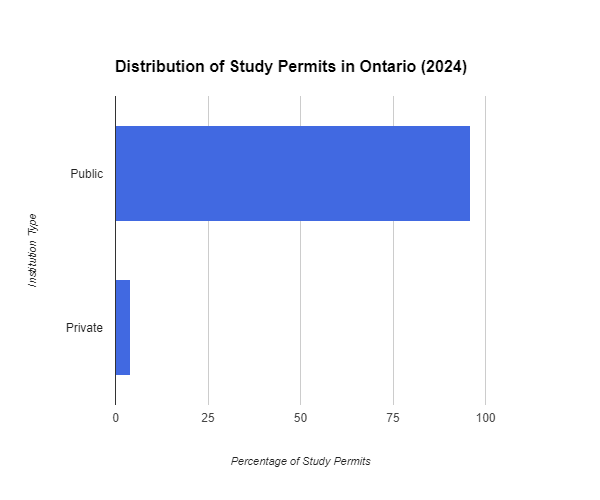
Why the Change?
The press release comes in response to a decision from IRCC earlier this year to cap the number of study permits issued to international students across Canada in 2024 and 2025.
This measure from IRCC is for international students at the undergraduate level. The cap excludes international students at the primary and secondary school level and students pursuing Masters and doctoral degrees.
The Ontario provincial government has chosen to allocate study permits for international students by prioritizing programs in several high-demand areas:
- Skilled trades
- Health human resources
- Science, Technology, Engineering and Mathematics
- Hospitality
- Childcare
Ontario also specified that it will prioritize French-language enrolment. It is essential because employers compete for workers with French language skills.
Boost Your Chances: Programs & French
So, how can you increase your chances of getting one of the 96% of Ontario’s study permits?
- Choose a high-demand program: Research programs that align with Ontario’s labour market needs to make your application more competitive.
- French language: The government prioritizes international students with French language skills. Learning some French could be an advantage!
Ontario’s Study permit allocations compare to other provinces?
The proportion of study permits allocated to public institutions in Ontario is higher than in other provinces. For example, British Columbia (the province with the second most Designated Learning Institutions (DLIs) after Ontario) split its allocation roughly evenly between public post-secondary institutions (53%) and private institutions (47%). British Columbia’s Ministry of Post-Secondary Education and Future Skills confirmed the province will be allocated 83,000 undergraduate study permit applications for 2024.
Ontario has not yet announced the total number of study permit applications that it has been given from the federal government this year. Guidelines provided by IRCC suggest that the province will have the largest quota for study permits of any province or territory based on its population size.
1-Year Masters in Canada: All You Need to Know
Next Steps for Provincial Attestation Letter (PAL)
We are still waiting for details on the application process. The Ontario government will release information on obtaining a provincial attestation letter (PAL), a required document for your study permit application. International students who wish to study in Ontario are to contact their school of choice directly for information on the required documents. According to the Ontario College Application Service (OCAS)—the centralized application service for colleges in Ontario—international students will not have to apply for PALs directly. The school can request on your behalf to the Ontario Ministry of Colleges and Universities, saving you time and ensuring a well-prepared application. Once the application is approved and the PAL is ready, international students will receive a copy of their letter from their DLI.
Conclusion
In conclusion, Ontario’s new policy for allocating study permits will impact international students applying to private institutions. With public universities and colleges taking priority, the competition for available spots will be higher than it was. However, as the application process for PAL and allocation of study permits for 2024 are still being finalized, it is crucial to stay informed and in touch with your school of choice for the latest updates.
The post 96% of Ontario’s Study Permits will go to Public Schools: All You Need to Know first appeared on canadaimmhub.ca.
The post 96% of Ontario’s Study Permits will go to Public Schools: All You Need to Know appeared first on canadaimmhub.ca.
]]>